 01
01Harvesting Bark
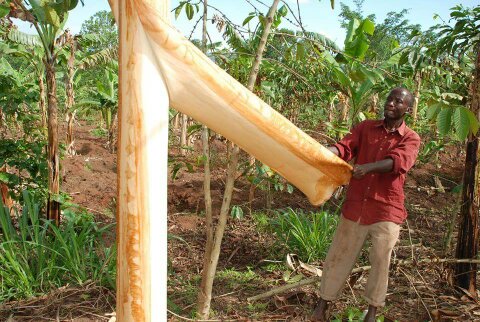
Stripped carefully from the Mutuba tree without causing harm. The tree regenerates within a year in full sustainability.
A living symbol of Buganda’s identity, spirituality, and timeless African craftsmanship.
Deep within the ancient Kingdom of Buganda, Lubugo was the fabric of kings and communities alike. Worn during sacred rituals, royal ceremonies, and rites of passage, it was revered as both cloth and sacred skin — binding generations to their ancestors.
 01
01Stripped carefully from the Mutuba tree without causing harm. The tree regenerates within a year in full sustainability.
 02
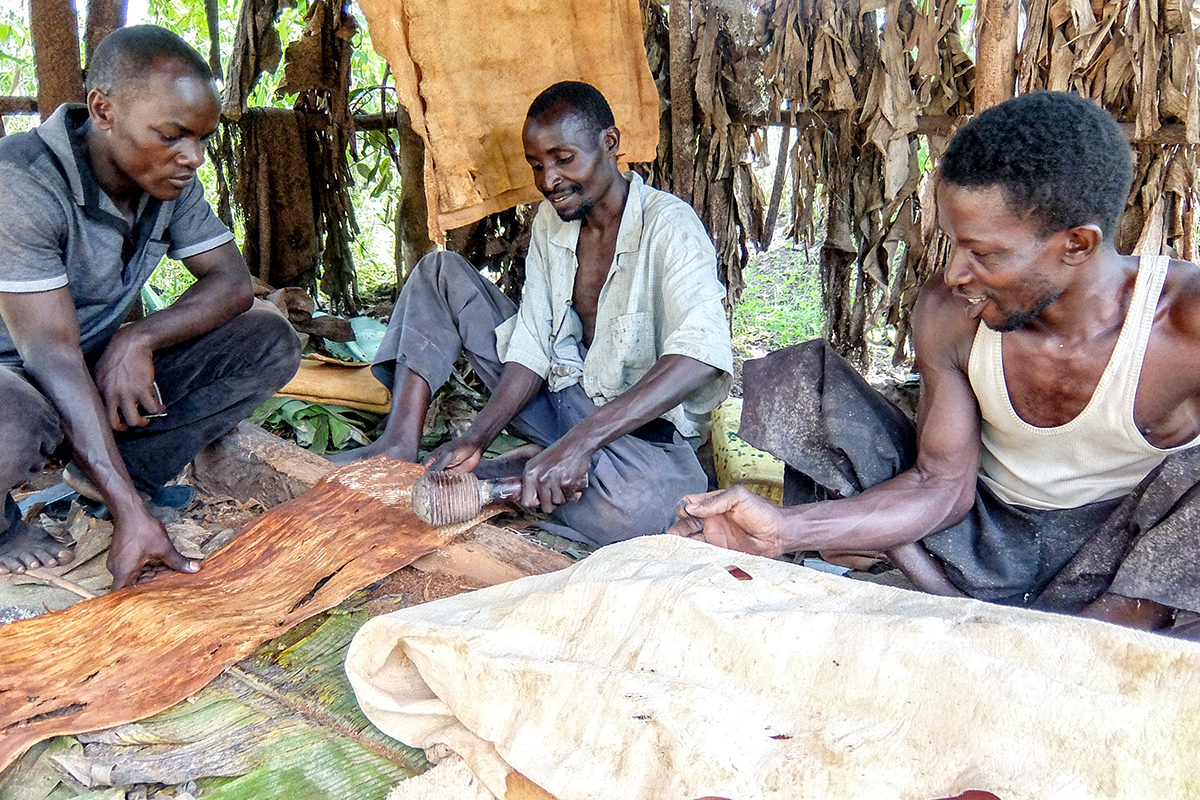
02Artisans beat the bark rhythmically with grooved wooden mallets, expanding and softening it into pliable fabric.
 03
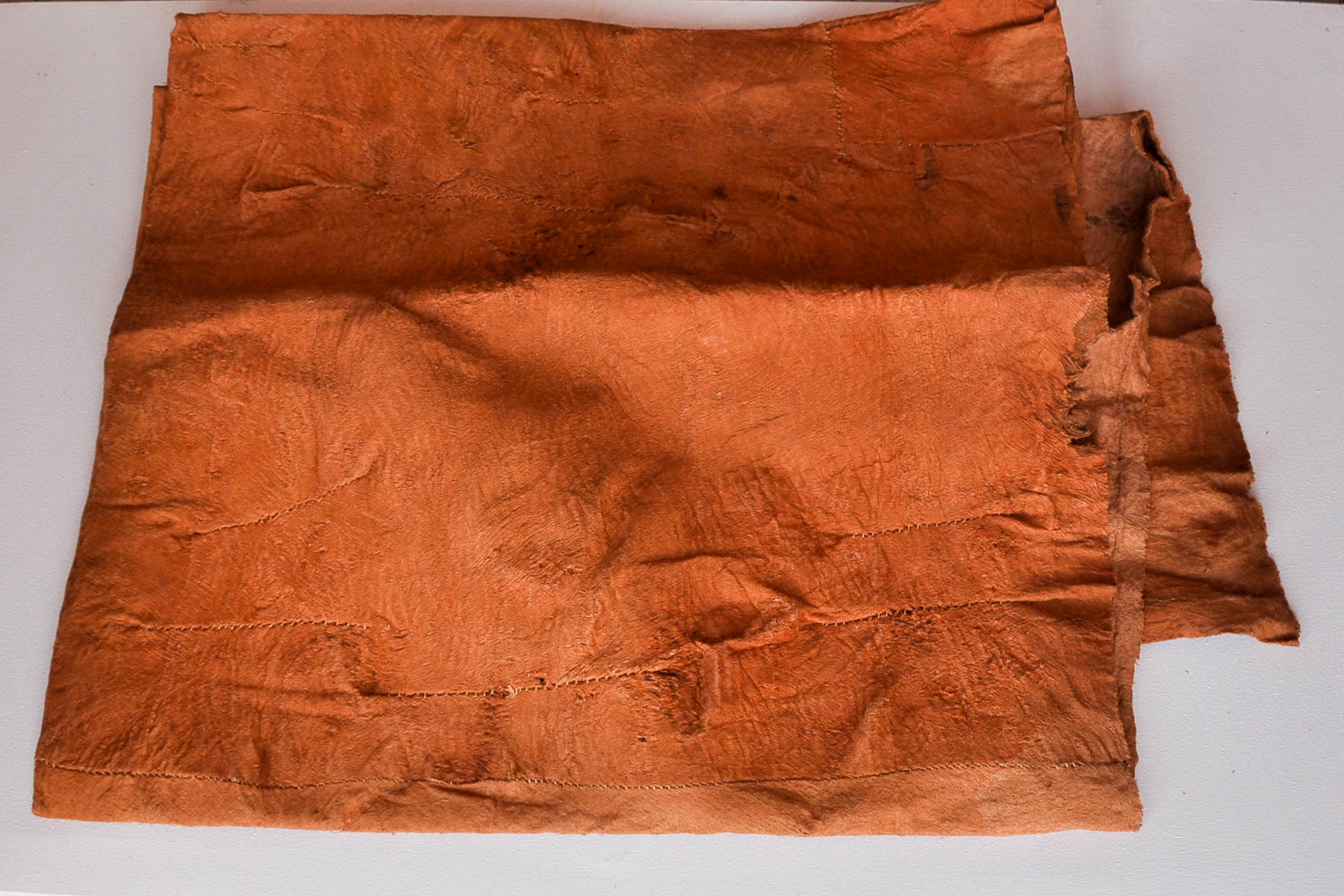
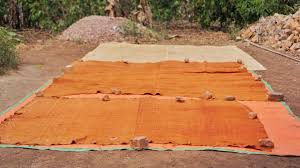
03Exposed to the African sun, turning into a rich copper-brown hue — each piece bearing a distinct grain fingerprint.
 04
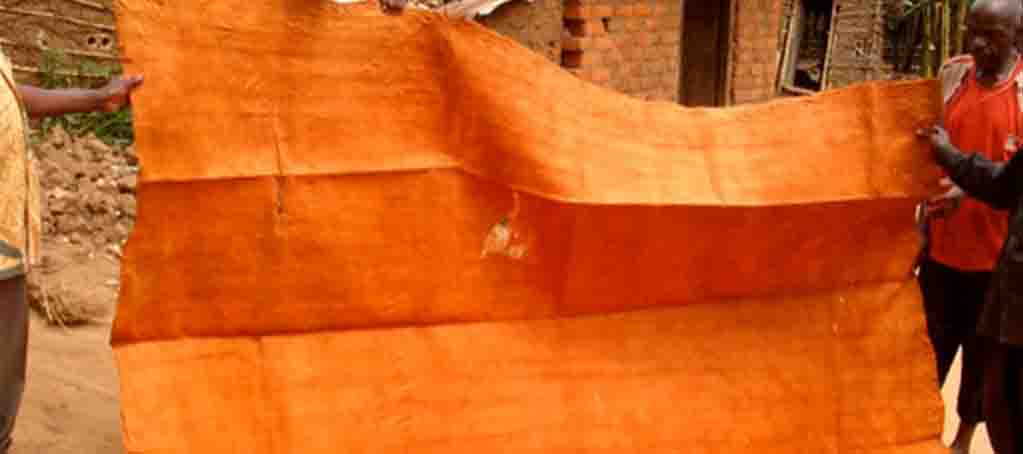
04Smoothed and refined, Lubugo becomes ready for ceremonial garments, modern fashion, and high-art preservation.
It clothes the living during sacred events and shrouds the departed. Once reserve for Kabakas (kings) and royal courts, it symbolizes resilience and unity with nature.
Inspiring contemporary designers and curators worldwide. From haute couture runways to art galleries, it bridges past and present into living art.
Acquiring a piece of Lubugo means inheriting centuries of natural beauty and cultural prestige woven with Buganda’s heartbeats.
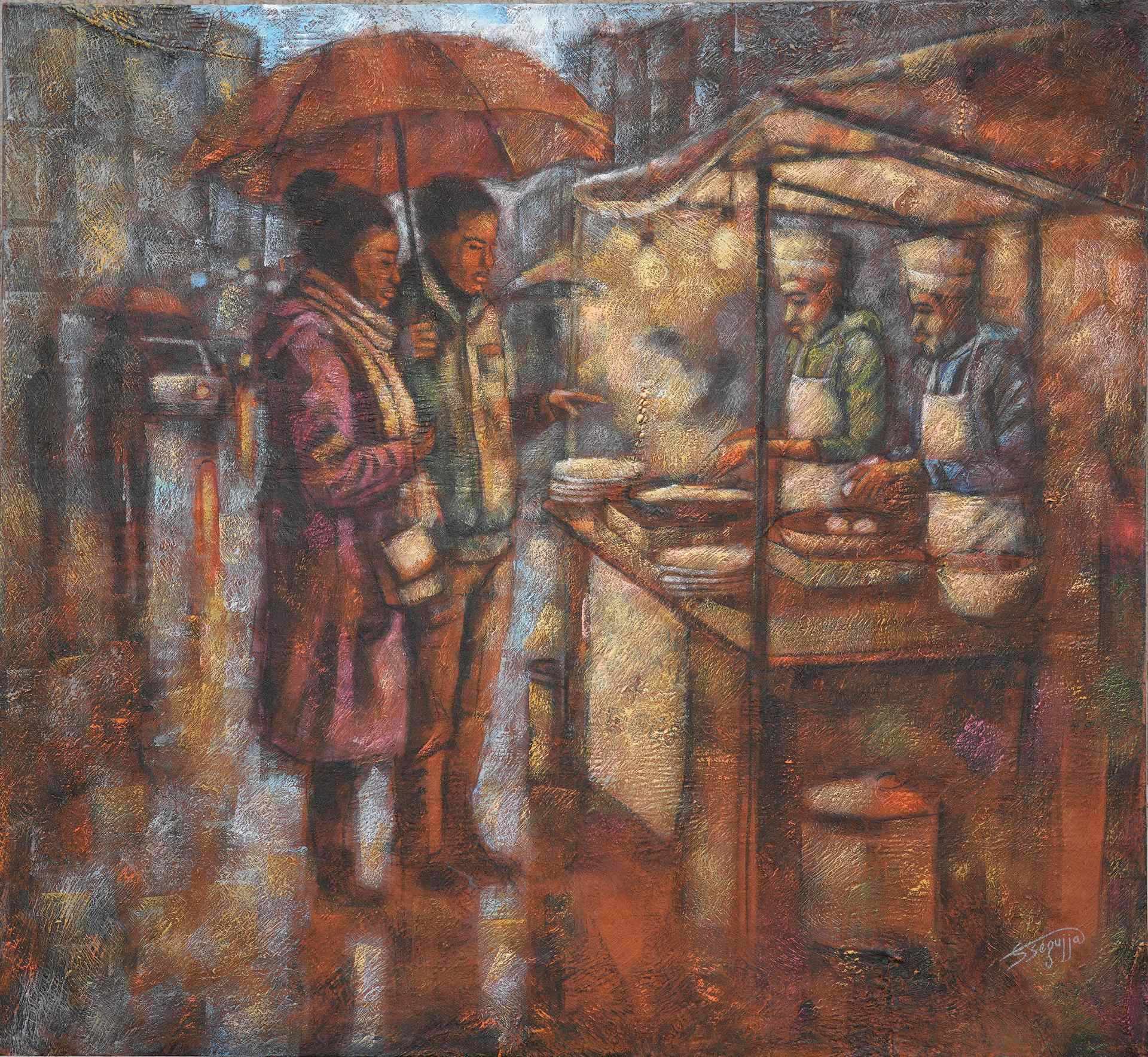
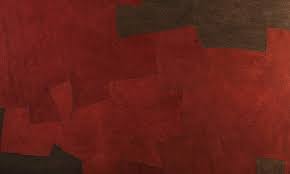
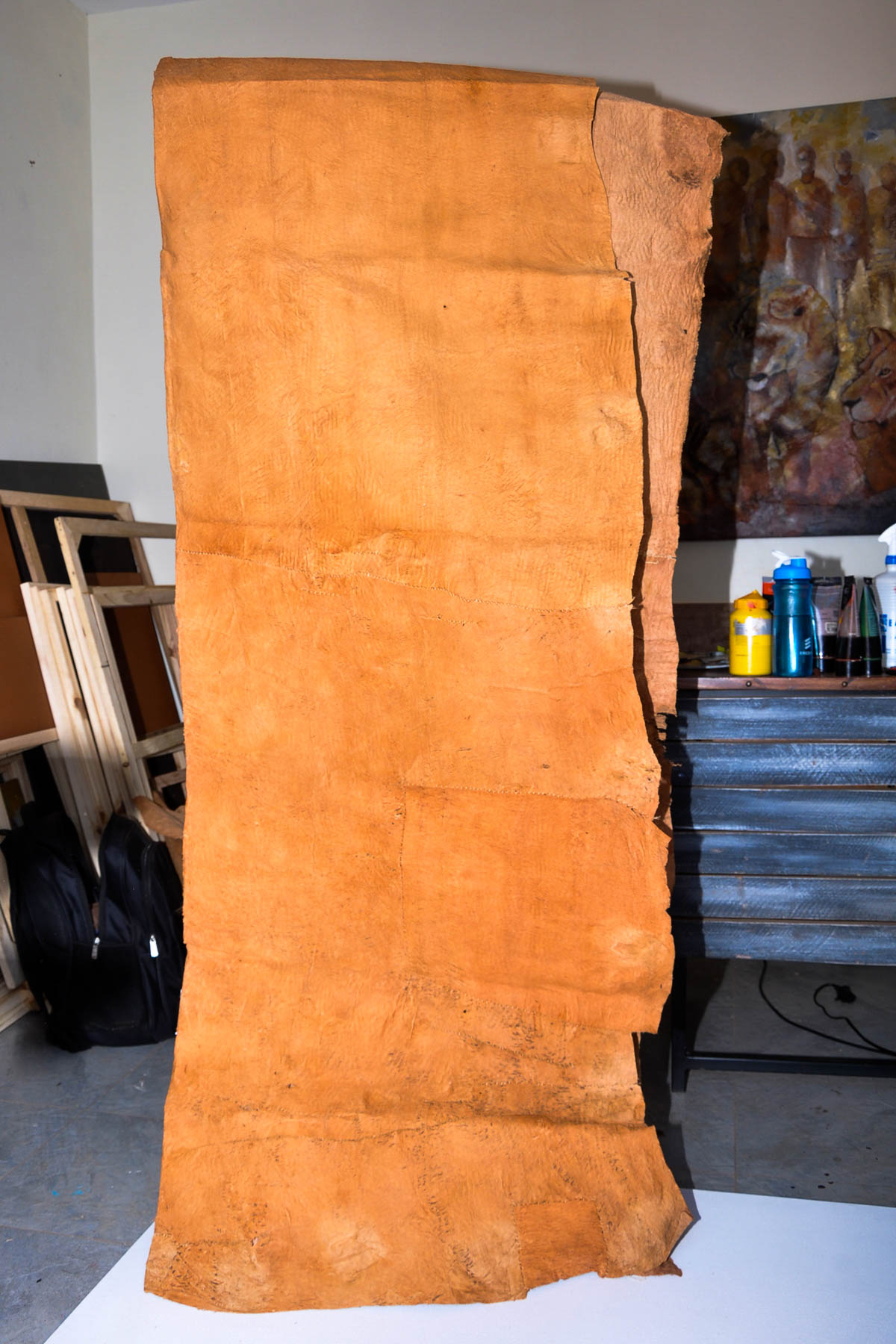
Working with barkcloth adds a rich, organic dimension to my art. Integrating a raw, handmade textile with traditional canvas requires delicate preparation, producing a piece impossible to replicate on standard surfaces.
 A
AStretched canvas receives a white primer followed by a dark brown base coat, eliminating white pinholes underneath.
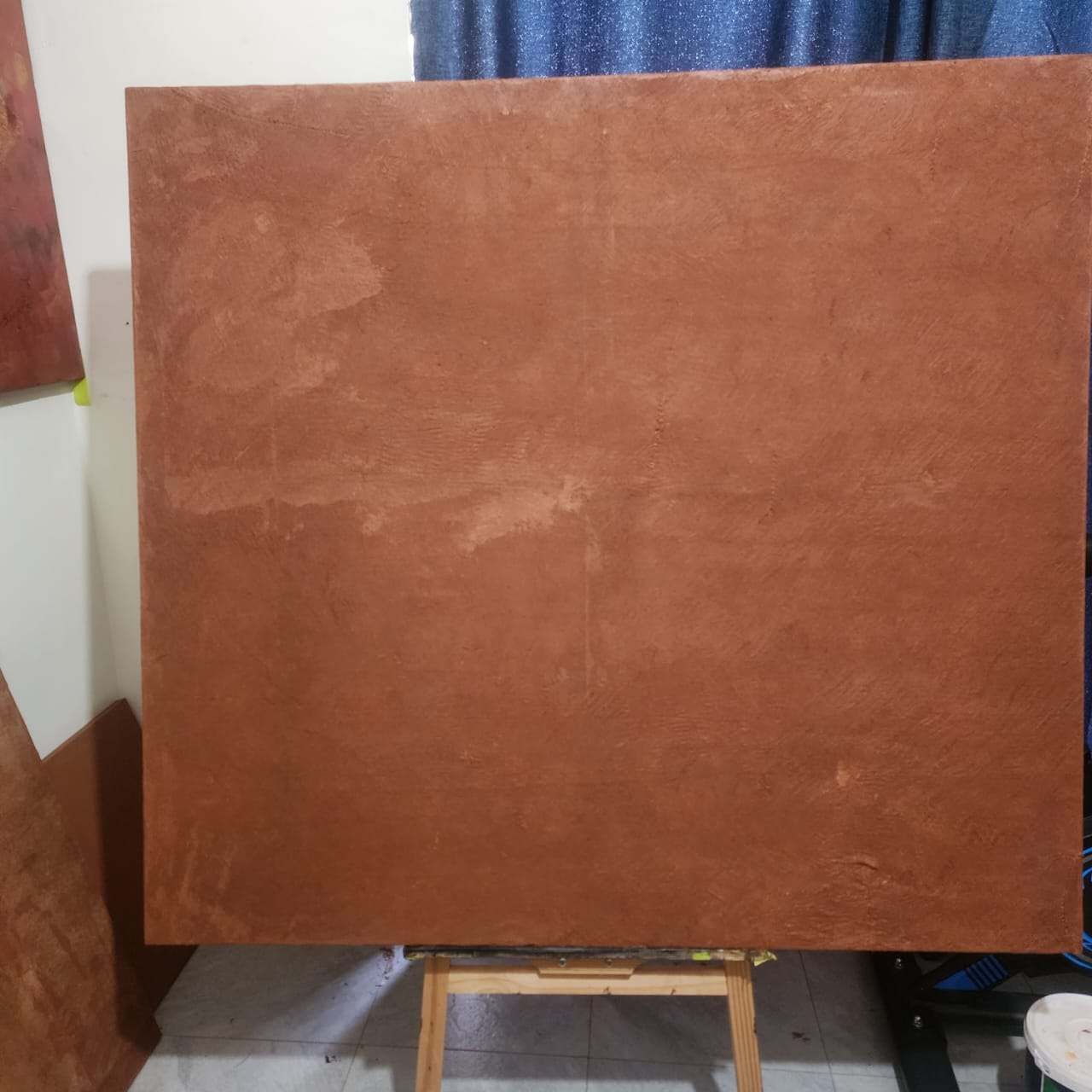 B
BBarkcloth is selected for texture, bonded to the canvas seamless, and hand-trimmed along clean borders when dry.
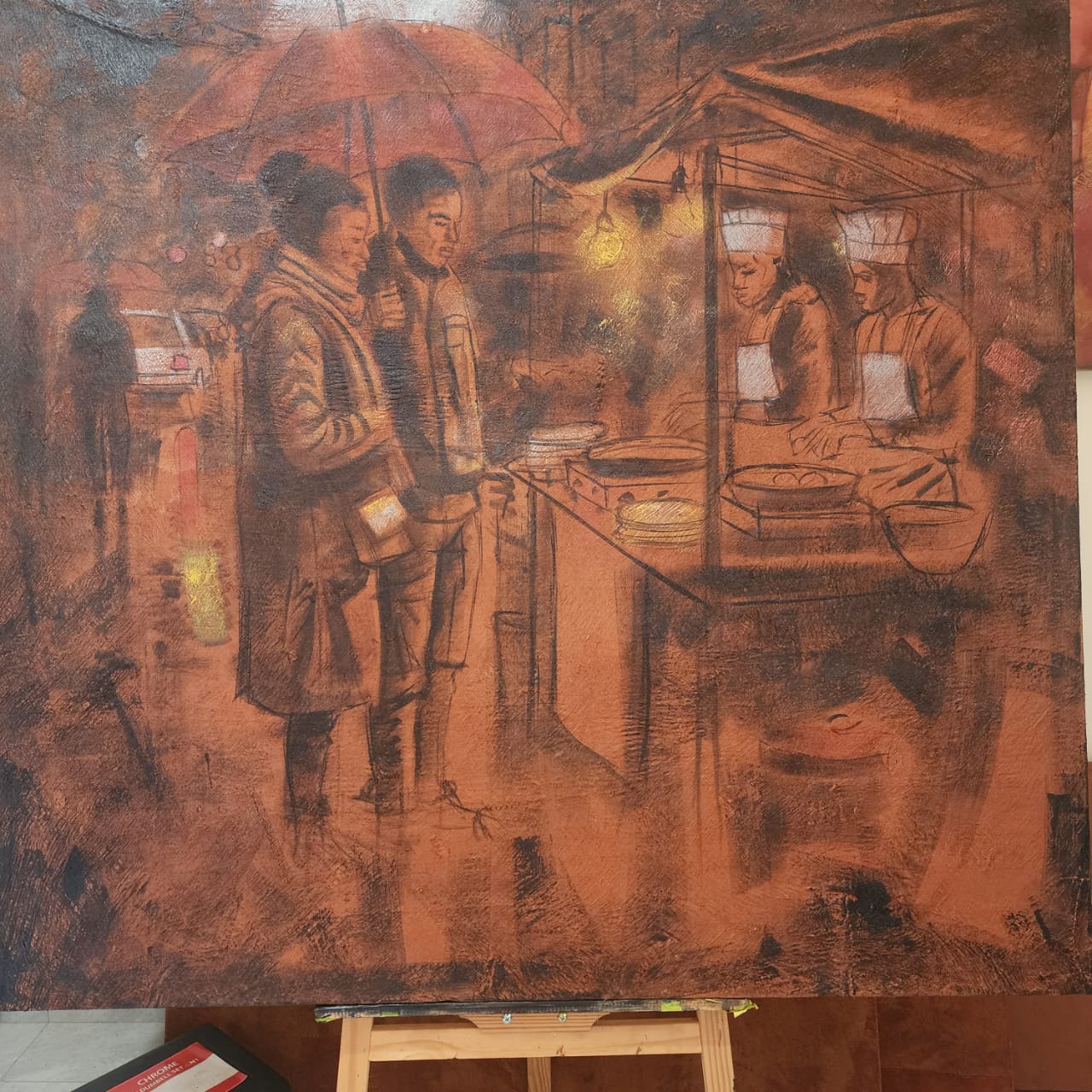 C
CA thin brown coat seals the fibers without hiding natural grain. It cures in natural sunlight before painting starts.
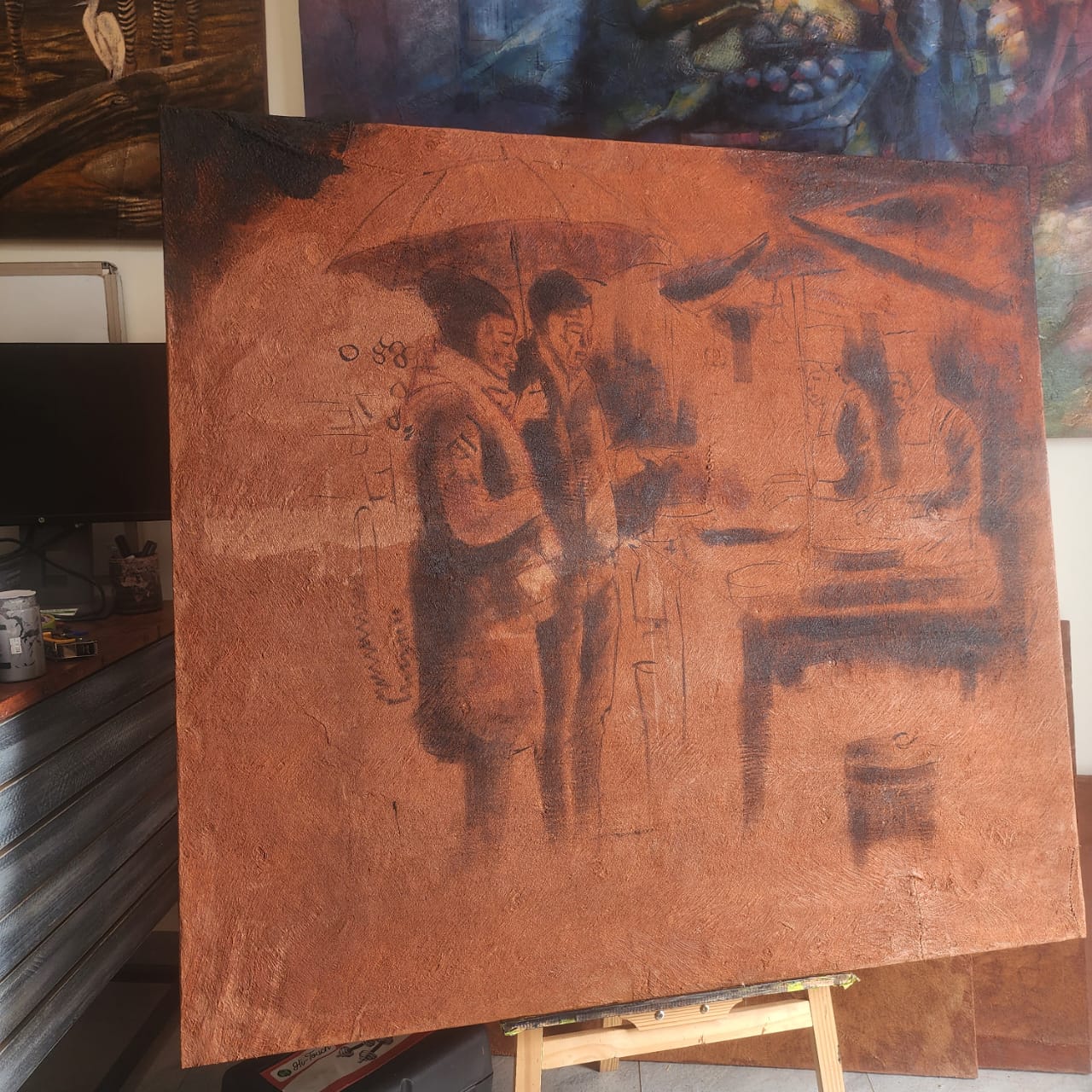 D
DTranslucent glaze layers build rich colors gradually over a dark sketch, allowing organic organic bark textures to glow through.
Every piece of handmade barkcloth possesses inherent variations in texture and grain. By embracing these raw imperfections, no two finished paintings can ever be identical — each artwork becomes an unrepeatable fusion of nature and human technique.